Polycarbonate (PC) films feature high light transmittance, excellent impact resistance, wide temperature resistance, superior electrical insulation and outstanding dimensional stability. They serve as essential high-performance functional substrates for new energy power batteries, photovoltaics, semiconductor packaging, display optics, medical packaging, industrial security and other industries.
As downstream industries raise higher requirements for ultra-thin design, high precision, low internal stress and excellent uniformity of PC films, the drawbacks of traditional forming processes have become prominent, restricting the yield rate and domestic mass production of high-end PC functional films.
To address common industrial challenges, we have conducted targeted R&D on extrusion and calendering processes for ultra-thin PC films. Through multiple rounds of machine testing and parameter optimization, we have developed a standardized forming solution with high precision, great stability and flexible iteration capability. It effectively solves forming defects, unbalanced performance and high commissioning costs of ultra-thin PC films, and fully supports new product R&D, process debugging and small-batch customized production.
Core Industrial Pain Points: Four Major Challenges in High-end PC Film Forming
Traditional cast film and conventional extrusion processes have inherent defects in the R&D and mass production of high-end PC films, which directly undermine product quality and production efficiency.
●Insufficient forming precision for ultra-thin films, limiting application in precision scenarios
For PC films with a thickness of 0.1–0.3 mm, traditional processes often result in large thickness deviation, surface ripples, poor flatness and warpage. Such products fail to meet the strict dimensional consistency requirements of semiconductor packaging, high-end display optical films and other precision fields.
●Poor material adaptability and high defective rate
PC material is characterized by high melt viscosity, narrow plasticizing temperature range and strong hygroscopicity, which sets extremely high standards for production equipment and processing environment. Uneven temperature control and unstable extrusion pressure of ordinary equipment easily cause defects including bubbles from hydrolysis, crystal points due to insufficient plasticization, and yellowing caused by thermal degradation.
●Difficulty in balancing multiple properties and unbalanced overall quality
Conventional forming processes cannot optimize optical performance, dimensional stability and mechanical strength simultaneously. Prioritizing light transmittance will lead to insufficient rigidity and poor dimensional stability; enhancing mechanical strength tends to leave residual internal stress, resulting in post-production deformation and uneven light transmission. These issues make it hard to meet the demands of high-end multi-functional films.
●Inefficient connection between R&D and mass production with high iteration costs
Traditional large-scale production lines feature long commissioning cycles, high material costs and inflexible parameter adjustment. They cannot adapt to rapid formula iteration and multi-specification trial production, greatly slowing down new product development and market response.
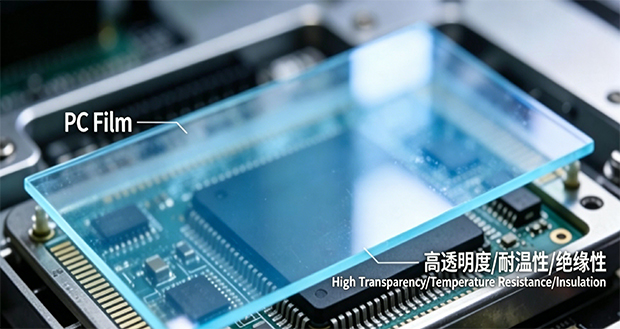
Targeted Solutions: Optimized Extrusion & Calendering Process System for Ultra-thin PC Films
Based on bench-top precision extrusion and calendering equipment, we take 0.15 mm ultra-thin PC film as the test object. By optimizing full-range parameters and adopting closed-loop process control, we build a dedicated forming system to tackle industrial difficulties and achieve high-precision, low-defect and stable production of PC films.
●Precision Zoned Temperature Control | Eliminate uneven plasticization, yellowing, degradation and bubbles
In view of PC’s high melt viscosity, difficult plasticization, vulnerability to thermal degradation and hydrolysis, we adopt segmented temperature control to ensure sufficient plasticization while protecting the material.
Extruder & Die Temperature: Gradient temperature from 290℃ to 280℃ from the first barrel section to the die. No water cooling at the feeding section. The stable high temperature reduces melt viscosity for uniform plasticization and smooth material flow, and avoids melt degradation and film yellowing caused by excessive temperature difference.
Calender Roll Temperature: Middle and lower rolls maintained at 120℃, upper roll at room temperature for natural cooling. Constant temperature on middle and lower rolls enables full stretching and regular shaping of melt. The naturally cooled upper roll relieves internal stress fundamentally and improves film flatness.
●Closed-loop Extrusion & Pressure Stabilization System | Solve uneven thickness and unstable material output
To improve the forming precision of ultra-thin films, we apply a dual closed-loop control system for screw speed and melt pressure to stabilize material flow throughout production.
Screw speed and motor torque are precisely matched to adjust extrusion rate intelligently, preventing equipment overload and unstable output.
Constant melt pressure is maintained. The filter-free process fits the production of high-purity raw materials and ensures uniform material output for consistent film thickness.
Independent adjustable tension for winding and edge trimming prevents wrinkles, offset and uneven tightness during film rolling.
●Full-process Quality Control System | Balance optical performance, dimensional stability and mechanical properties
A complete quality control mechanism covering raw material pretreatment and post-forming processing is established to improve the overall performance of high-end films.
Raw Material Pretreatment: PC materials are dried at 120℃ for 4–6 hours to completely remove adsorbed moisture, so as to avoid bubbles and pinholes from hydrolysis and guarantee high light transmittance and purity of finished films.
Independent Roll Speed Ratio Adjustment: Three rolls are driven by independent servo motors. The adjustable speed ratio accurately controls molecular orientation, optimizing both optical clarity and dimensional stability.
Dynamic Roll Pressure Control: Roll pressure is adjusted according to real-time melt viscosity to stably control the thickness tolerance of 0.15 mm ultra-thin films. It eliminates local thickness deviation and improves film flatness and mechanical rigidity.
●Lightweight Precision R&D Process | Shorten commissioning time and reduce iteration costs
The bench-top extrusion and calendering solution replaces traditional large production lines for trial runs. All process parameters including roll temperature, speed, pressure and tension can be finely adjusted. It supports rapid trial and iteration of multiple formulas and specifications, shortens R&D cycles, cuts material and time costs, and seamlessly connects laboratory R&D with small-batch mass production.
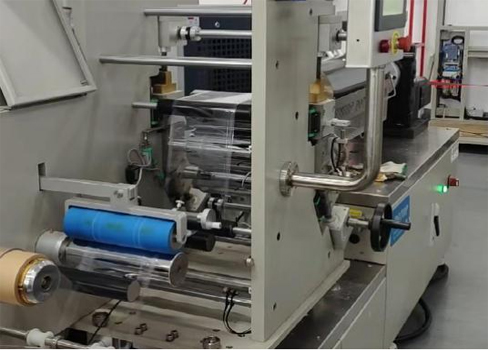
Core Advantages of the Solution (Verified by Machine Testing)
Verified by multiple production tests on 0.15 mm ultra-thin PC films, this extrusion and calendering solution is mature and reliable, and effectively solves the four major forming challenges in the industry.
●High Forming Precision: The dual closed-loop extrusion system and three-roll precision calendering structure deliver controllable thickness tolerance and excellent uniformity. It thoroughly solves ripples, deformation and uneven thickness of ultra-thin films to meet strict requirements of high-precision applications.
●Higher Product Yield: Combined with precision temperature control, standardized raw material pretreatment and stabilized extrusion, the system eliminates bubbles, crystal points, yellowing and residual internal stress, and greatly optimizes optical performance and appearance.
●Balanced Overall Performance: Fine adjustment of speed ratio and roll pressure realizes the perfect combination of high light transmittance, superior flatness, high rigidity and stable dimension, making the films applicable for new energy, semiconductors, display optics and other high-end fields.
●Cost-effective & Efficient Iteration: The highly flexible process system is ideal for formula R&D, process optimization and small-batch customized production. It overcomes the drawbacks of long commissioning and high costs of traditional production lines, helping enterprises capture market opportunities rapidly.
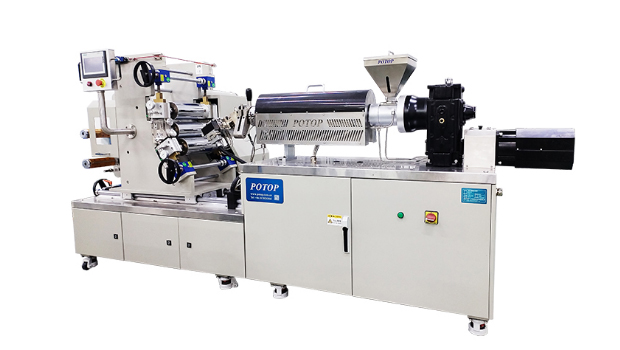
Application Scenarios
This PC film extrusion process solution is applicable to the R&D and production of PC films with thickness ranging from 0.1 mm to 3 mm.
Typical applications: Insulation films for new energy power batteries, photovoltaic backsheet substrates, insulation films for semiconductor packaging, high-end display optical films, protective substrates for consumer electronics, medical sterile packaging films, industrial security windows and more.
We provide comprehensive technical support for the domestic production, refinement and high-yield manufacturing of high-end PC functional films.