
PVC (Polyvinyl Chloride) is one of the most‑widely‑used general‑purpose thermoplastics across the globe. Its core advantages include low cost, inherent flame retardancy, excellent acid‑alkali corrosion resistance and favorable electrical insulation, alongside highly adjustable formulations. It is extensively applied in construction, chemical, electrical and packaging industries. Additives can be modified to produce either rigid structural components or flexible elastic parts, delivering outstanding cost‑performance for anti‑corrosion and insulation applications under ambient‑temperature conditions. Nevertheless, it has drawbacks including poor heat resistance, thermal decomposition risk and plasticizer migration for flexible grades. Strict compliance‑based material selection is required for food‑contact, medical and high‑temperature working scenarios.
What Is PVC?
PVC is an amorphous thermoplastic polymer polymerized from vinyl‑chloride monomers. Pure PVC resin cannot be processed directly and must be compounded with stabilizers, plasticizers, lubricants and other additives before forming. Three mainstream categories are widely adopted in industry: rigid UPVC, flexible PVC and modified CPVC.
Core Positioning: A low‑cost general‑purpose material for corrosion resistance and electrical insulation, suitable for routine low‑load applications at ambient temperature. It is not recommended for high‑temperature service, strong‑oxidizing‑medium environments, high‑precision components or implant‑grade medical applications.
Key Features:
✅ Self‑extinguishing & flame‑retardant, acid‑alkali resistant, good electrical insulation, adjustable hardness, cost‑effective
❌ Low heat‑resistance threshold, poor thermal stability, prone to brittleness at low temperatures, plasticizer‑migration risk for flexible grades
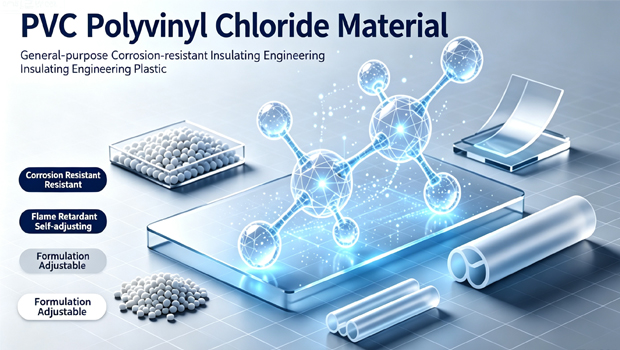
Main Advantages of PVC
●Outstanding Chemical‑Corrosion Resistance
Stable against dilute acids, dilute alkalis, salt solutions and humid environments at room temperature. It serves as a primary material for industrial anti‑corrosion pipes and sheets, with reliable hydrolysis and moisture resistance.
●Inherent Self‑extinguishing Flame Retardancy
Chlorine‑containing molecular structure delivers a high oxygen index. Rigid UPVC easily achieves UL94 V‑0 rating and extinguishes itself once removed from flame, ideal for flame‑retardant construction and electrical components.
●Favorable Electrical‑Insulation Performance
Stable dielectric properties under dry conditions, good insulation and arc‑resistance, well‑suited for low‑voltage electrical parts, cable insulation and wiring accessories.
●Versatile Formulation & Processability
Hardness can be adjusted via plasticizers. Impact‑resistance and weatherability can be improved with modification additives. Available processing technologies include extrusion, injection molding, calendering and thermoforming, and production scrap is recyclable.
●Lightweight & Economical
Lower density than metals. Raw‑material and processing costs remain competitive, offering remarkable cost advantages for mass industrial production.
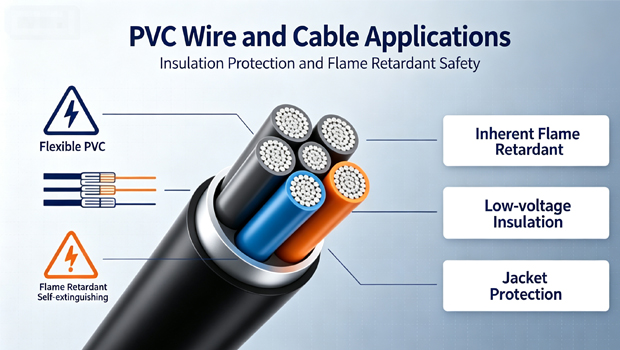
Primary Limitations of PVC
●Poor Heat Resistance (Critical Drawback)
The long‑term continuous service temperature of standard UPVC shall not exceed 60 °C. Deformation occurs at elevated temperatures. It is heat‑sensitive during processing; high‑temperature exposure triggers thermal decomposition, releases corrosive hydrogen‑chloride gas and causes yellowing or premature failure of finished products. Modified CPVC provides a maximum long‑term service temperature of only 93 °C and is not qualified for high‑temperature operating conditions.
●Noticeable Low‑temperature Brittleness
Unmodified rigid PVC exhibits poor low‑temperature impact resistance and may crack under cold conditions. Impact‑modifying additives are required to enhance cold‑weather performance.
●Compliance‑Related & Ageing Risks
Plasticizers in flexible PVC tend to migrate and precipitate. Standard industrial grades contain restricted additives and are prohibited from direct contact with food, children’s articles or in‑vitro medical applications. Specially‑certified compliant grades are mandatory for such scenarios.
●Restricted Chemical Compatibility
Not resistant to concentrated strong acids, strong oxidants, aromatic hydrocarbons or ester‑based organic solvents. Stress‑cracking may occur under load, and long‑term grease contact accelerates material ageing.
●Limited Mechanical Performance
Prone to creep under high loads, with suboptimal fatigue resistance and wear performance. It shall not be used for transmission or reciprocating stress‑bearing structural components.
Main PVC Grades and Typical Applications
●UPVC (Rigid Polyvinyl Chloride)
Plasticizer‑free formulation, high rigidity, excellent dimensional stability, corrosion‑resistant and flame‑retardant; susceptible to low‑temperature brittleness.
Applications: Water supply & drainage pipes, industrial anti‑corrosion pipes and sheets, door‑window profiles, electrical trunking, junction boxes.
●Flexible PVC
High‑plasticizer formulation, high flexibility and bendability with good elasticity; risks of plasticizer migration and low heat resistance.
Applications: Cable sheaths, flexible hoses, artificial leather, general‑purpose sealing parts. Not suitable for food‑contact or grease‑exposed environments.
●CPVC (Chlorinated Polyvinyl Chloride)
Superior heat and chemical resistance compared with UPVC, long‑term service temperature up to 93 °C; higher cost and slightly increased brittleness.
Applications: Industrial hot‑water pipelines, high‑temperature acid‑alkali anti‑corrosion pipe fittings, fire‑protection sprinkler piping.
●Common Modified PVC Series
Impact‑modified PVC: Improves low‑temperature brittleness, for outdoor and low‑temperature‑service profiles and pipes
Weather‑resistant modified PVC: UV‑resistant additives added, for outdoor building materials and exposed equipment components
Low‑smoke flame‑retardant PVC: Suitable for flame‑retardant cable and rail‑transit electrical parts
Compliance‑specialized PVC: Food‑grade and in‑vitro medical‑grade PVC, for designated compliant‑use scenarios only. Mixing with industrial‑grade PVC is forbidden.
Typical Application Fields
Construction & Building Materials: Water‑supply & drainage pipes, rainwater pipes, door‑window profiles, anti‑corrosion sheets, ventilation ducts
Low‑voltage Electrical Accessories: Cable sheaths, electrical conduit, cable trunking, low‑voltage equipment housings
Chemical Anti‑corrosion: Ambient‑temperature acid‑alkali pipelines, sewage‑treatment equipment, waste‑gas‑treatment components, CPVC high‑temperature anti‑corrosion pipework
Packaging & Daily‑use Products: Standard thermoformed sheets, films, artificial leather, sealing components (excluding high‑temperature food‑grease‑contact scenarios)
Medical Applications: Only certified medical‑grade PVC is permitted for disposable in‑vitro infusion consumables. Implantation into the human body is strictly prohibited.
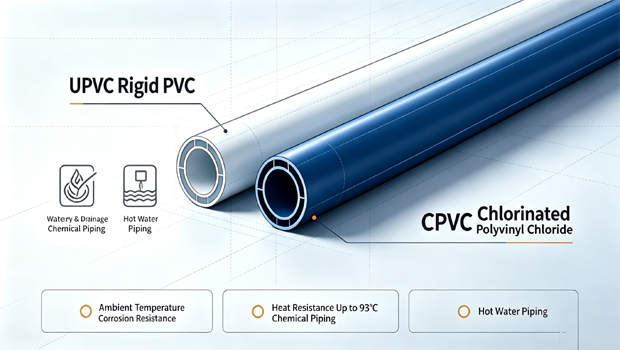
Practical Material‑selection Guidelines
✅ Ambient‑temperature anti‑corrosion, plumbing and low‑cost rigid structural parts → UPVC
✅ Elevated‑temperature media, hot‑water or mild acid‑alkali service conditions → CPVC
✅ Flexible‑bending requirements and electrical‑insulation protection → Certified flexible‑grade PVC
✅ Long‑term outdoor exposure → Weather‑resistant modified‑PVC grade
✅ Food‑contact, children‑product or in‑vitro medical scenarios → Specially‑certified compliant grades. Industrial‑grade PVC is not allowed.
Critical Warnings
UPVC shall not be used for continuous service above 60 °C. For working temperatures over 95 °C, switch to alternative high‑performance materials such as PPH or PVDF.
Unmodified rigid PVC is not recommended for low‑temperature load‑bearing applications.
Not applicable to wear‑resistant transmission structural components.
Unsuitable for environments with concentrated strong‑oxidizing acids.
Strictly control processing temperatures to avoid thermal decomposition.
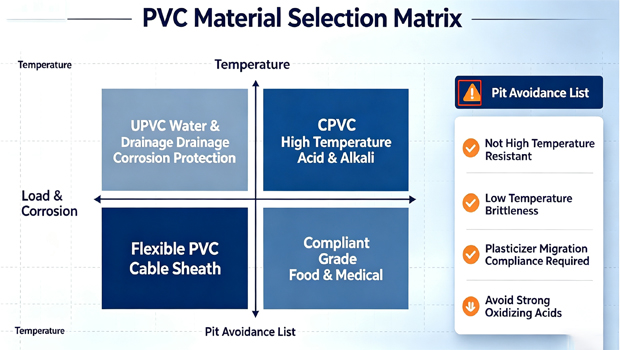
PVC is a cost‑effective general‑purpose plastic offering reliable corrosion resistance, flame retardancy and electrical insulation for ambient‑temperature, low‑load operating conditions. However, its inherent limitations in heat resistance, low‑temperature toughness and plasticizer compliance prevent its deployment in high‑temperature, heavy‑corrosion, high‑load or ultra‑precision applications. Food‑contact and medical‑use projects must adopt dedicated certified grades. Upgrade to high‑performance engineering plastics when operating conditions exceed PVC’s service limits.